

Safeguarding Curriculum
There is a planned curriculum for safeguarding. This teaches your children how to keep themselves safe and what to do if any adult makes them feel unsafe. This curriculum covers many key aspects about how children can be safe and is mainly delivered through our Jigsaw scheme of learning but is further supported by external organisations such as Childline, KOOTH, NSPCC as well as work through assemblies and enrichment days and weeks.
Our curriculum gives pupils opportunities: to experience life in all its diversity; to acquire knowledge; understanding and skills that significantly impact on personal development, behaviour and welfare. Our PHSE curriculum covers all areas of Safeguarding through each of the strands but is sensitive in recognise that some subjects are more sensitive subjects than others and need to be taught at an age-appropriate level, or within a small group or 1:1 level where a more urgent need arises. Our wider whole school opportunities include our assembly programme, various enrichment weeks/days and the application of whole school culture and expectations e.g. behaviour policy enacted in each classroom.
We have developed an open and safe learning environment in which pupils express their views, seek help and help others. The promotion of equality, diversity, and the inclusion for pupils and staff, helps prevent any form of direct or indirect discriminatory behaviour. Our children learn to not tolerate any prejudiced behaviour. Our behaviour policy promotes making good choices and exhibiting good learning behaviours. Time is taken within weekly assemblies to explore the school values and expectations for learning.
Safeguarding curriculum
PHSE Jigsaw overview
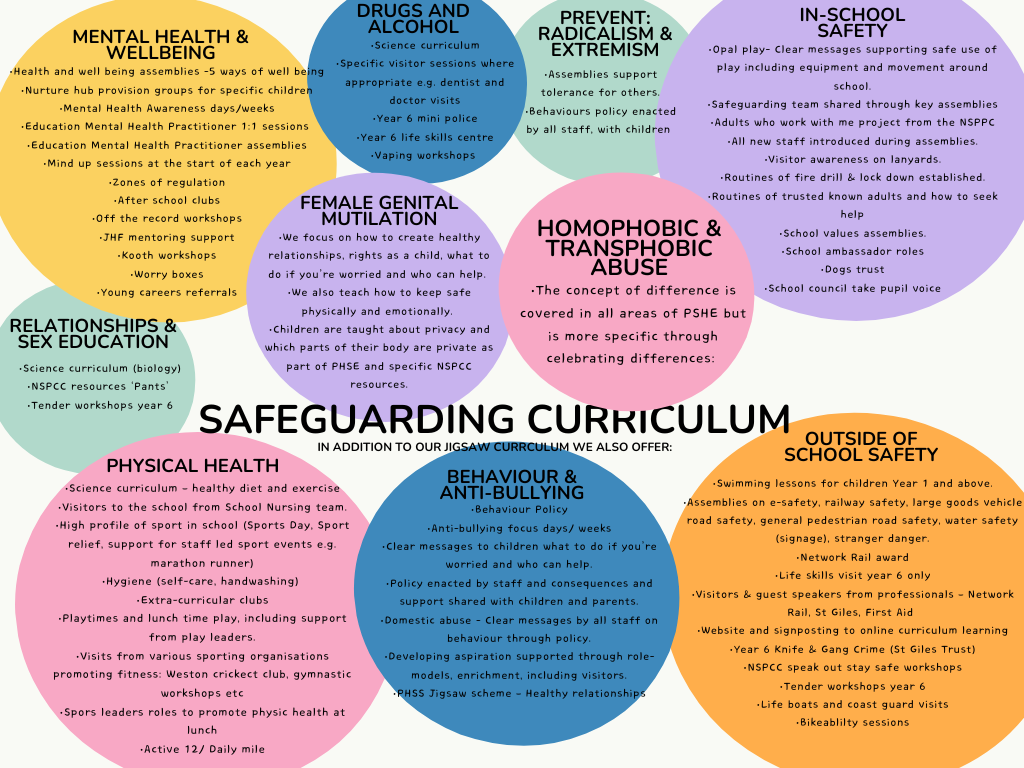
Safeguarding Curriculum Overview
Mental Health & wellbeing
- Health and wellbeing assemblies focused on the 5 ways of well being
- Nurture hub provision groups for specific children
- Mental Health Awareness days/weeks
- Education Mental Health Practitioner 1:1 sessions
- Education Mental Health Practitioner assemblies and open mornings
- Mind up sessions at the start of each year
- Zones of regulation
- Enrichment in the curriculum: Sports, Arts (musicians, arts)
- After school clubs
- Off the record workshops
- JHF mentoring support
- Kooth workshops
- Worry boxes
- Young careers referrals
Physical health - PE curriculum (RealPE & Specialist), including swimming
- Science curriculum – healthy diet and exercise
- Visitors to the school from School Nursing team.
- High profile of sport in school (Sports Day, Sport relief, support for staff led sport events e.g.
marathon runner)
- Hygiene (self-care, handwashing)
- Extra-curricular clubs
- Playtimes and lunch time play, including support from play leaders.
- Visits from various sporting organisations promoting fitness: Weston cricket club, gymnastic workshops etc
- Sports leaders roles to promote physic health at lunch
- Active 12/ Daily mile In-school safety
- Opal play- Clear messages supporting safe use of play including equipment and movement around school.
- Safeguarding team shared through key assemblies • Adults who work with me project from the NSPPC
- All new staff introduced during assemblies.
- Visitor awareness on lanyards.
- Routines of fire drill & lock down established.
- Routines of trusted known adults and how to seek help
- School values assemblies.
- School ambassador roles
- Dogs trust
- School council take pupil voice
Outside of school safety
- Swimming lessons for children Year 1 and above.
- Assemblies on e-safety, railway safety, large goods vehicle road safety, general pedestrian road safety, water safety (signage), stranger danger.
- Network Rail award
- Life skills visit year 6 only
- Visitors & guest speakers from professionals – Network Rail, St Giles, First Aid
- Website and signposting to online curriculum learning
- Year 6 Knife & Gang Crime (St Giles Trust)
- NSPCC speak out stay safe workshops
- Tender workshops year 6
- Life boats and coast guard visits
- Bikeablilty sessions
Relationships & Sex Education
- Science curriculum (biology)
- NSPCC resources ‘Pants’
• Tender workshops year 6
Behaviour & Anti-Bullying
- Behaviour Policy
- Anti-bullying focus days/ weeks
- Clear messages to children what to do if you’re worried and who can help. – STOP, WALK, TELL
- Policy enacted by staff and consequences and support shared with children and parents.
- Anti- bullying ambassadors - Diana award.
- Hot chocolate, value points and dojo celebrate good behaviour
- PSCO – consequences and age of responsibility workshop Drugs and alcohol
- Science curriculum
- Specific visitor sessions where appropriate e.g. dentist and doctor visits
- Year 6 mini police
- Year 6 life skills centre
- Vaping workshops year 5 & 6 by Drug sense Homophobic & Transphobic abuse
- Pride week celebration
Medically and neurodiversity
- Zones of regulation work
Prevent: Radicalism & Extremism
- Assemblies support tolerance for others through stories from other cultures and religions.
- Behaviour policy
Female genital mutilation
- healthy relationships run by tender
- Children are taught about privacy and which parts of their body are private through NSPCC resources.
- Pants – taught in year 1 and revisit throughout school
Attendance: Children missing/absent in education
- High profile on attendance in school – turn up ted
- 99% attendance awards and raffle
- Regular assembly messages on importance of education to support life.
- Culture in school promotes enthusiasm to attend through curriculum enjoyment and success
Online safety
- Use of social media to promote discussions and inform parents, carers and children on current online trends
- 1:1 pastoral work focusing on social media dangers and keeping self-safe online: • Safe internet day lead by the anti-bullying ambassadors